
Thanks! We’ll be in touch with you soon.
Thanks! We’ll be in touch with you soon.
Thanks! We've emailed it to you.
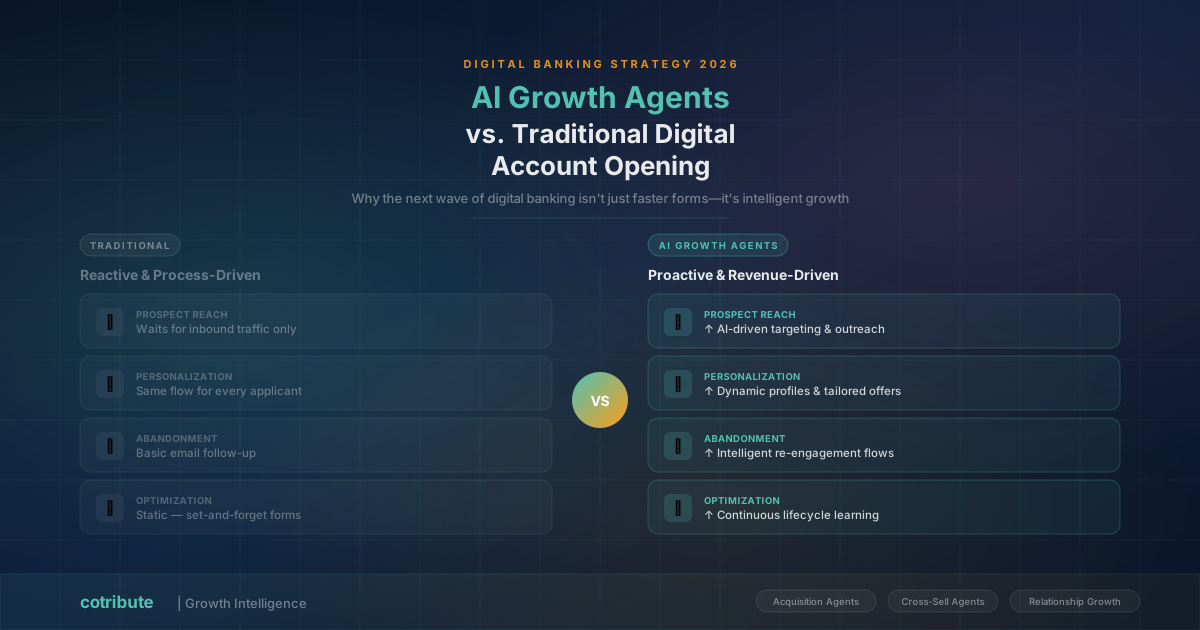
AI Growth Agents vs.Traditional Digital Account Opening
Why the next wave of digitalbanking isn’t just faster forms—it’s intelligent growth
For the past decade, the digital transformation conversation in banking has centered on one objective: move account opening online. And for good reason. Digital origination eliminates paper, reduces branch dependency,and meets consumers and businesses where they already are—on their phones and laptops.
But here’s what most institutions are starting to realize: digitizing the application form was the first chapter, not the whole story. Traditional digital account opening—even when it’s well-executed—is fundamentally reactive. It waits for a prospect to find you, navigate to your website, and decide to apply. It’s a better mousetrap, but it’s still a mousetrap.
AI Growth Agents represent a fundamentally different approach. They don’t wait. They identify, engage, and convert—proactively, intelligently, and at a scale that no manual or traditional digital process can match. This post examines what separates these two approaches and why the distinction matters for every bank and credit union leader planning their growth strategy.
What Traditional Digital Account Opening Does Well
Let’s give credit where it’s due. Traditional digital account opening platforms have delivered meaningful improvements over paper-based and branch-only origination. The best implementations offer streamlined application flows with minimal screens, real-time identity verification via KYC and KYB integrations, automated decisioning that eliminates most manual review, mobile-responsive design for on-the-go applicants, and direct integration with core banking systems for instant account provisioning.
These capabilities are table stakes in 2026. Any institution that hasn’t deployed them is already behind. But for institutions that have made this investment, a harder question emerges: why isn’t the digital channel driving the growth we expected?
Where Traditional Approaches Hit Their Ceiling
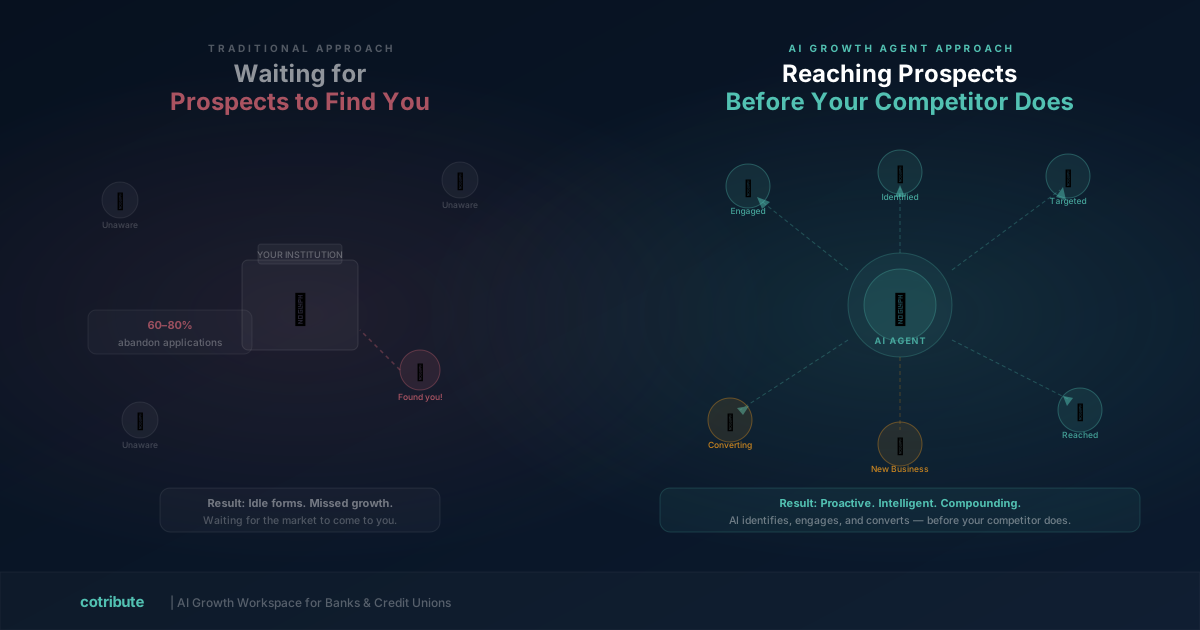
The answer lies in what traditional digital account opening can’t do. Even the most polished digital origination platform shares a fundamental limitation: it’s passive. It relies entirely on inbound traffic—people who already know about your institution and are motivated enough to seek you out and start an application.
That model has three structural problems.
The Awareness Gap
Most prospective members and customers don’t know your institution exists, or if they do, they don’t know what you offer. Traditional digital account opening does nothing to solve this. Your beautifully designed application sits idle until someone finds it.
The Personalization Gap
When a prospect does arrive at your application, traditional platforms treat everyone the same. A 25-year-old opening their first checking account gets the same experience as a small business owner looking for a commercial deposit relationship. There’s no intelligence about who the applicant is, what they need, or what offer would be most compelling for their situation.
The Follow-Up Gap
What happens when someone starts an application but doesn’t finish? In most institutions, not much. Maybe an automated email a few days later. Maybe nothing. The 60–80% of applicants who abandon the process largely disappear into a void.
Traditional digital account opening answers the question: “How do we process applications more efficiently?” AI Growth Agents answer a different question entirely: “How do we grow?”
What AI Growth Agents Do Differently
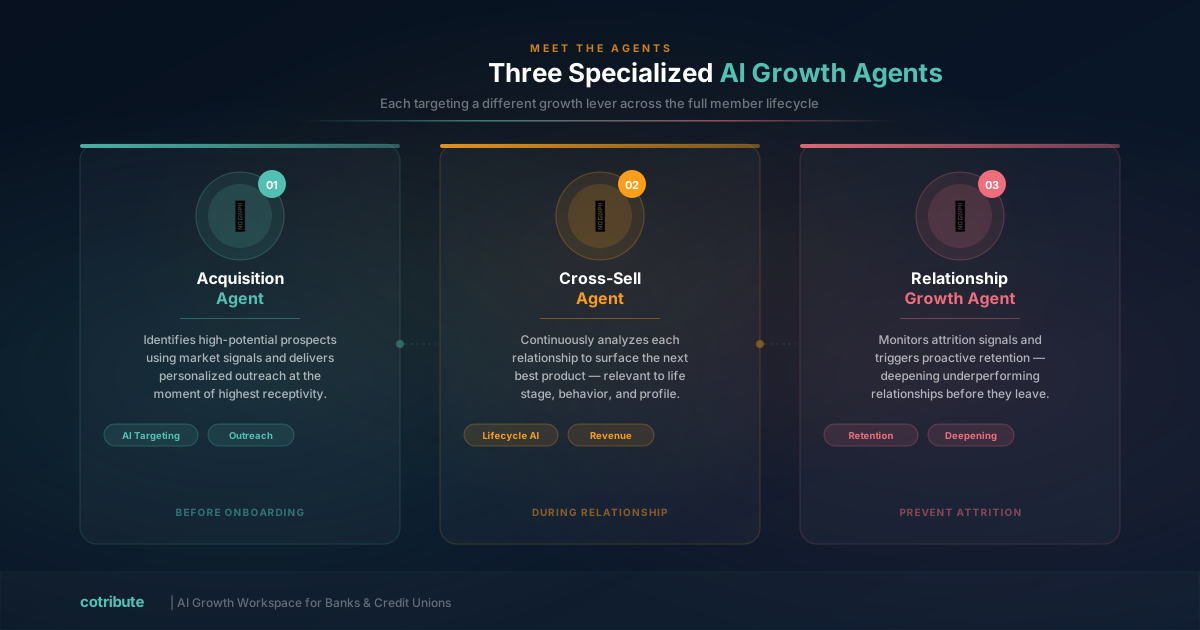
AI Growth Agents are purpose-built for financial institution growth. Unlike traditional platforms that digitize existing processes, Growth Agents operate across the entire acquisition and relationship lifecycle—before, during, and after the account opening event. They come in three specialized forms, each targeting a different growth lever.
Acquisition Agents
These agents don’t wait for prospects to find you. They analyze market signals, identify high-potential prospects based on demographic, behavioral, and financial data, and deliver personalized outreach at the moment of highest receptivity. Think of them as an always-on business development team that operates at digital scale. They can identify, for example, that a local business just received new funding and is likely in need of a commercial deposit account—and reach that business with a relevant offer before your competitor does.
Cross-Sell Agents
Once a member or customer is onboarded, Cross-Sell Agents continuously analyze the relationship to identify the next best product. They don’t just surface generic offers. They understand the member’s financial profile, behavior patterns, and life stage to deliver recommendations that actually feel relevant. A member who just paid off an auto loan might receive a savings goal recommendation. A business customer with growing payroll activity might get a treasury management conversation starter.
Relationship Growth Agents
These agents focus on deepening engagement and preventing attrition. They monitor for signals that a member is at risk of leaving—declining balances, reduced transaction frequency, rate shopping behavior—and trigger proactive retention strategies. They also identify opportunities to deepen relationships that are underperforming relative to their potential.
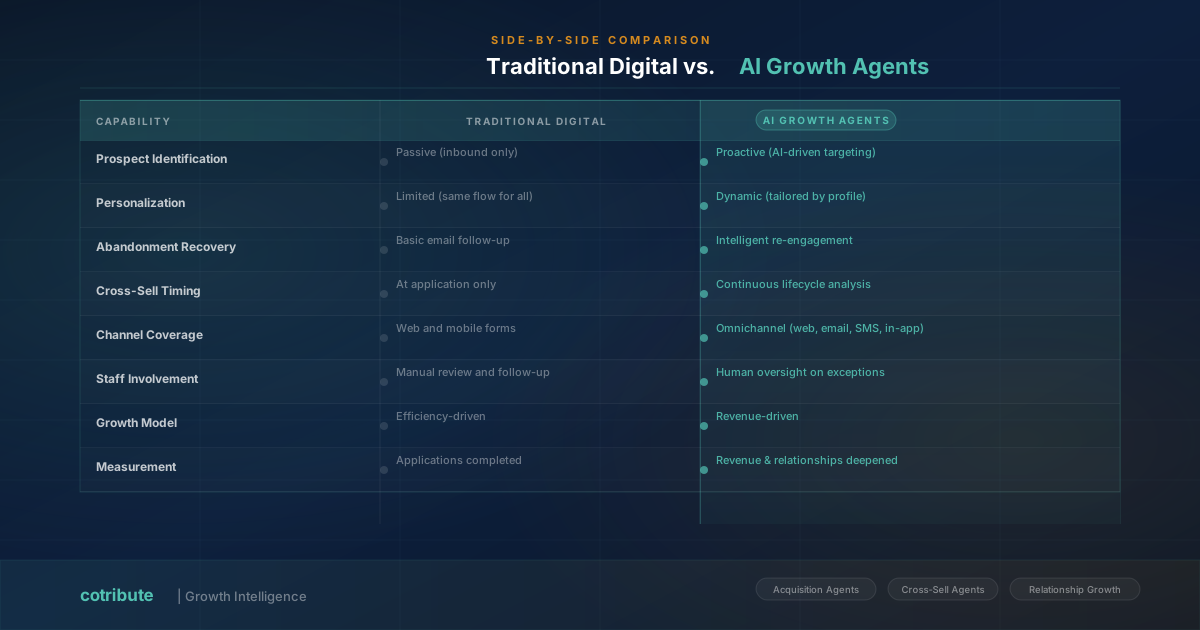
Side-by-Side: Traditional vs. AI Growth Agents
The Compounding Effect: Why This Gap Widens Over Time
The difference between traditional digital account opening and AI Growth Agents isn’t static. It compounds. Every month, Growth Agents learn more about what works—which messages resonate with which segments, what timing drives the highest conversion, which cross-sell sequences produce the most revenue. They optimize continuously, without requiring your team to manually test and adjust campaigns.
Traditional platforms, by contrast, are largely set-and-forget. The application flow you launch on day one is essentially the same application flow running on day 365. Any improvements require manual intervention, A/B testing programs, and development cycles.
Over a 12-month period, the cumulative impact of continuous AI optimization versus static digital forms can mean the difference between modest incremental growth and a fundamental shift in your institution’s growth trajectory.
The Compliance and Risk Advantage
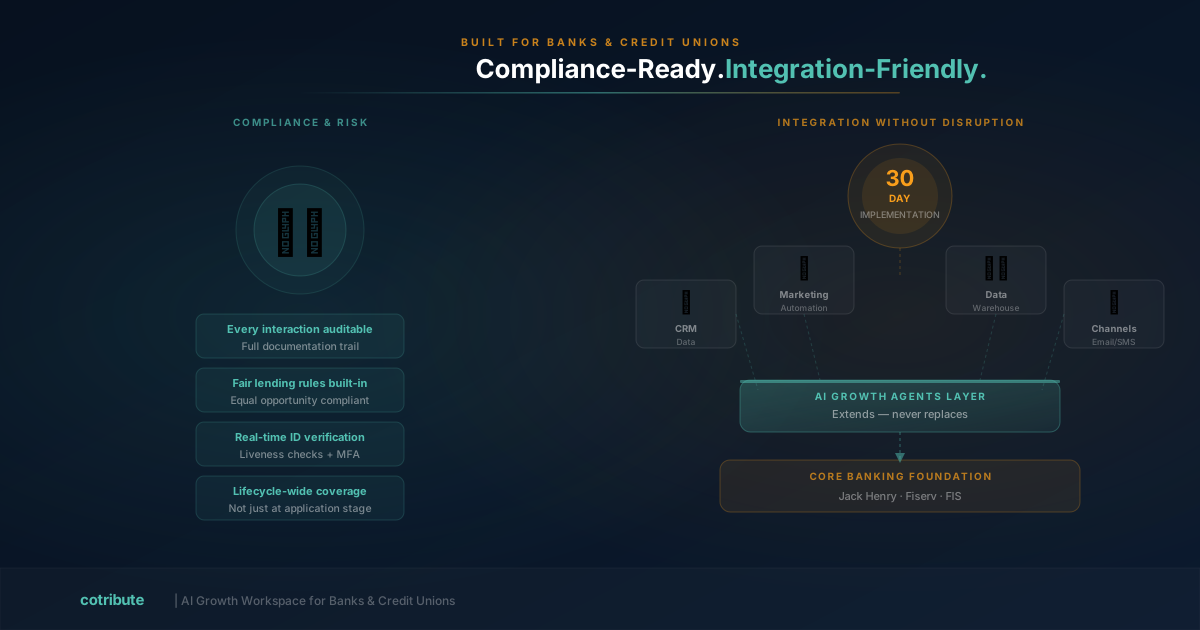
A common concern from risk and compliance leaders is that AI-driven growth tools might introduce new risk. In practice, well-designed AI Growth Agents actually strengthen compliance posture. Every interaction is documented and auditable. Offer targeting follows pre-configured rules that ensure fair lending and equal opportunity compliance. Identity verification and fraud detection happen in real-time, with liveness checks and multi-factor authentication built into the workflow rather than bolted on as an afterthought.
Traditional digital platforms handle compliance at the application stage. AI Growth Agents handle it across the entire relationship lifecycle—from first contact through ongoing engagement—creating a more comprehensive compliance record.
Integration Without Disruption
One of the most important practical considerations is how these approaches fit into existing technology stacks. Traditional digital account opening platforms typically require core banking integration—connecting to systems like Jack Henry, Fiserv, or FIS for account provisioning, KYC data pulls, and funding workflows.
AI Growth Agents build on that same integration layer but extend it. They connect to your CRM, marketing automation tools, data warehouse, and communication channels. The critical difference is that modern platforms are designed to layer onto your existing infrastructure rather than replace it. A 30-day implementation timeline is achievable precisely because these systems are built to integrate, not to require a wholesale technology overhaul.
Making the Transition: It’s Not Either/Or
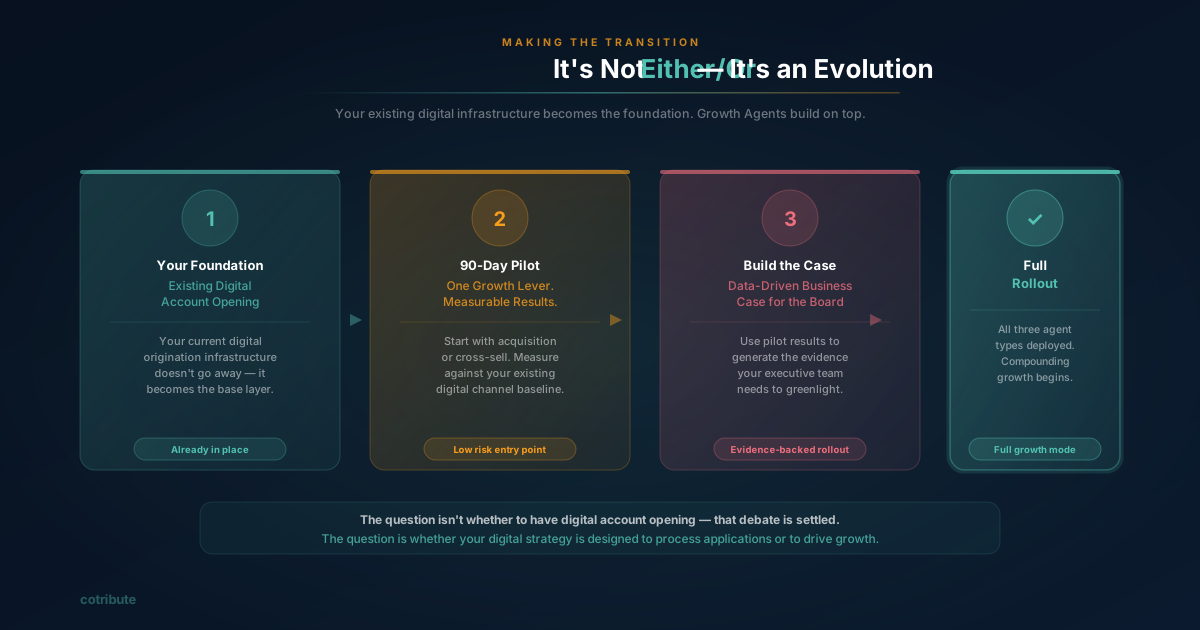
The good news is that moving from traditional digital account opening to AI Growth Agents isn’t a rip-and-replace decision. The most successful institutions treat it as an evolution. Your existing digital origination infrastructure becomes the foundation that Growth Agents build upon.
The practical path looks like this: start with a 90-day pilot focused on one growth lever—typically acquisition or cross-sell. Measure the results against your existing digital channel performance. Use that data to build the business case for broader deployment. This approach minimizes risk while generating the evidence your board and executive team need to greenlight a full rollout.
The Strategic Question
The question facing every bank and credit union executive today isn’t whether to have digital account opening. That debate is settled. The question is whether your digital strategy is designed to process applications or to drive growth.
Traditional digital account opening solves an operational problem. AI Growth Agents solve a strategic one. Both have a place in a modern financial institution’s technology stack, but only one is built to deliver the kind of proactive, intelligent, compounding growth that defines the next era of banking.
Want to see how AI Growth Agents can transform digital origination performance? Explore the AI Growth Workspace for Credit Union & Bank Executive (no cost)
.svg)
About Cotribute
Cotribute is a digital account opening platform purpose-built for community banks and credit unions. We help financial institutions compete in a digital-first world by delivering seamless, mobile-optimized account opening experiences across all account types—including HSAs, checking, savings, business accounts, and more.
Our platform includes automated identity verification, fraud detection, real-time decisioning, and core system integration with compliance built in.
Learn more: www.cotribute.com
