
Thanks! We’ll be in touch with you soon.
Thanks! We’ll be in touch with you soon.
Thanks! We've emailed it to you.
.svg)
How First Fidelity Bank Found a $100M+ Deposit Growth Opportunity Hiding in Plain Sight
First Fidelity Bank's CIO John Symcox and Cotribute CEO Philip Paul discuss the digital HSA strategy that's transforming deposit acquisition
Most community banks are fighting the same battle: competing for deposits against regional banks, digital-first neobanks, and well-funded fintech platforms.
The instinct is to fight fire with fire—match rates, open more branches, spend more on marketing.
But what if there's a better way?
That's what John Symcox, Chief Information Officer at First Fidelity Bank, explored when he joined our CEO Philip Paul on the BankTalk Podcast.
The conversation revealed something surprising: Health Savings Accounts (HSAs) aren't just a niche product. They're a strategic deposit growth engine that most community banks are completely overlooking.
Here's the story of how First Fidelity Bank turned HSAs into a competitive advantage—and what other community banks and credit unions can learn from their approach.
The Deposit Growth Challenge: Everyone's Fighting for the Same Dollar
Let's be honest about where community banks and credit unions are today.
The competitive landscape has exploded:
- Regional banks with massive marketing budgets
- Neobanks offering 5%+ on savings accounts
- Digital banks with instant account opening
- Fintech platforms making banking feel like tech, not finance
Traditional strategies aren't working like they used to:
- Rate wars erode margins
- Branch expansion is expensive and risky
- Generic "friendly service" messaging doesn't differentiate anymore
- Customer acquisition costs keep climbing
As John explained on the podcast, First Fidelity Bank was facing exactly this challenge. They needed deposit growth, but they didn't want to compete head-to-head in saturated markets.
The question became: Where can we compete differently?
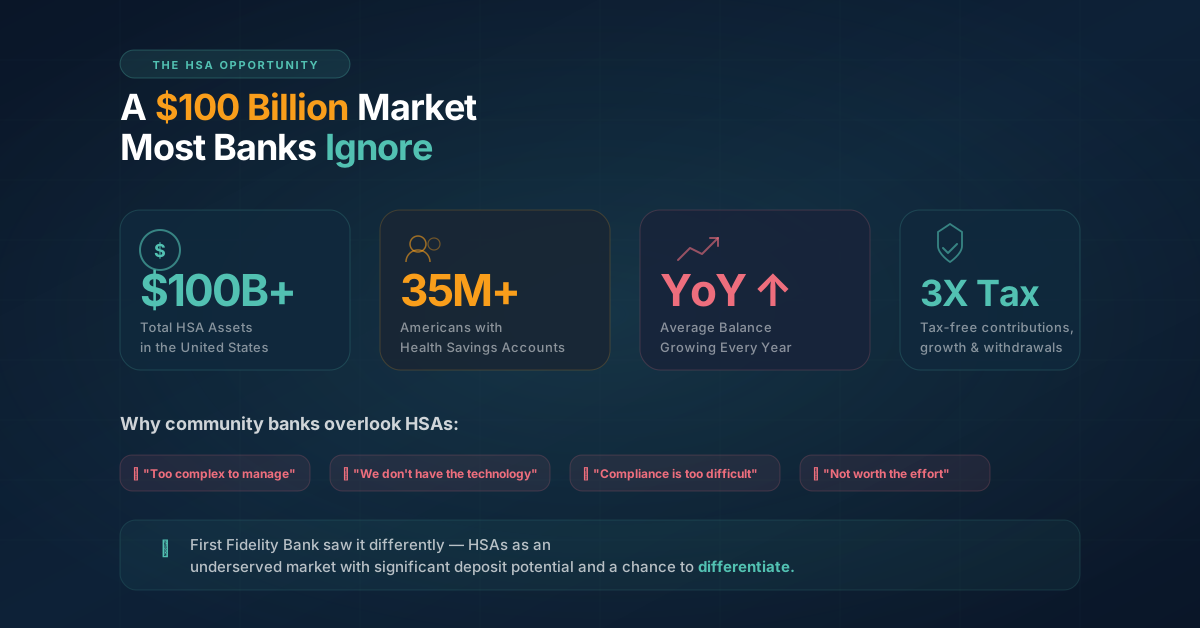
The HSA Opportunity: A $100 Billion Market Most Banks Ignore
Health Savings Accounts are one of the fastest-growing financial products in America.
The numbers are staggering:
- Over 35 million Americans have HSAs
- Total HSA assets exceed $100 billion
- Average account balance growing year over year
- Tax advantages make them attractive to consumers
- Employer adoption increasing as healthcare costs rise
Yet community banks largely ignore them.
Why? A few common reasons:
- "It's too complex to manage"
- "We don't have the technology"
- "Compliance is too difficult"
- "It's not worth the effort for our size"
- "Our core doesn't support it"
First Fidelity Bank saw it differently.
They saw HSAs as an underserved market with significant deposit potential—and a chance to differentiate in a crowded field.
The Digital Platform Decision: Build, Buy, or Partner?
Once First Fidelity Bank decided to pursue HSA accounts, they faced the question every bank faces with new digital initiatives:
Do we build it ourselves, buy a turnkey solution, or partner with a fintech?
The Build Option:
Pros:
- Total control
- Custom features
- No vendor dependence
Cons:
- Years of development time
- Millions in upfront costs
- Ongoing maintenance burden
- Compliance and regulatory expertise required
- Technology talent hard to recruit and retain
The Buy Option:
Pros:
- Faster than building
- Proven technology
- Vendor support
Cons:
- Still expensive
- Often requires significant customization
- Legacy systems don't integrate well
- User experience designed for banks 10 years ago, not today
The Partner Option:
Pros:
- Fast time to market
- Modern user experience
- Fintech expertise and innovation
- Compliance built in
- Lower upfront costs
Cons:
- Requires trust in vendor
- Less control over roadmap
- Integration challenges (if partner isn't built for banking)
First Fidelity Bank chose to partner.
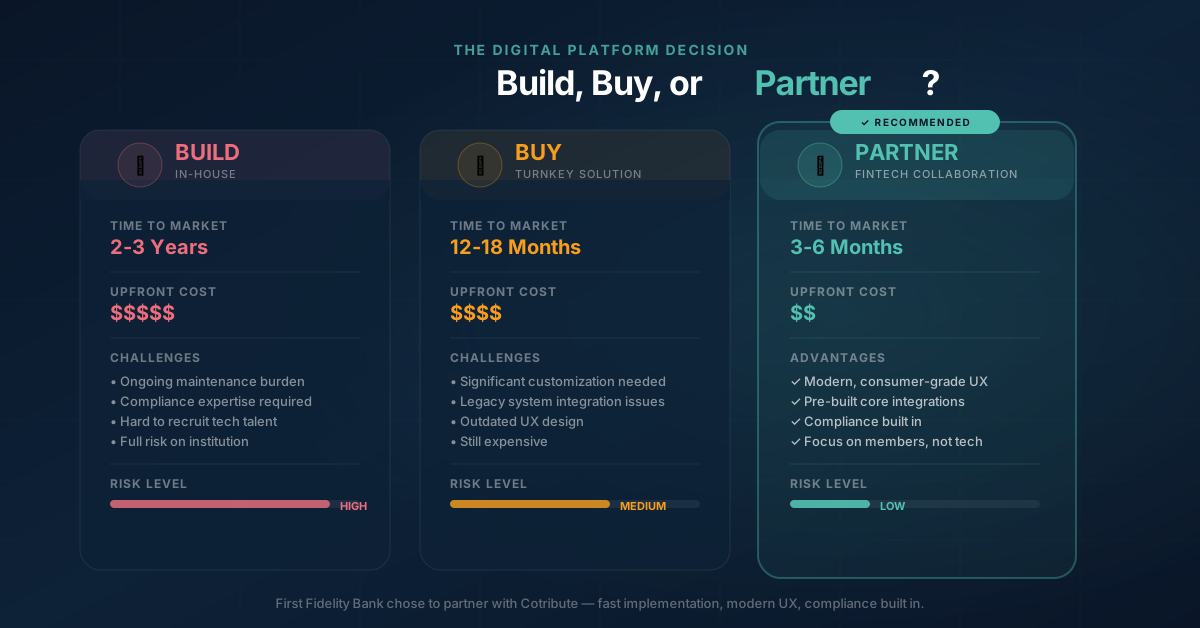
Specifically, they chose Cotribute—not just for HSAs, but as their digital account opening platform for all account types.
Why Cotribute? The Technology and Strategy Behind the Decision
As Philip and John discussed on the podcast, the partnership worked because of alignment on several key factors:
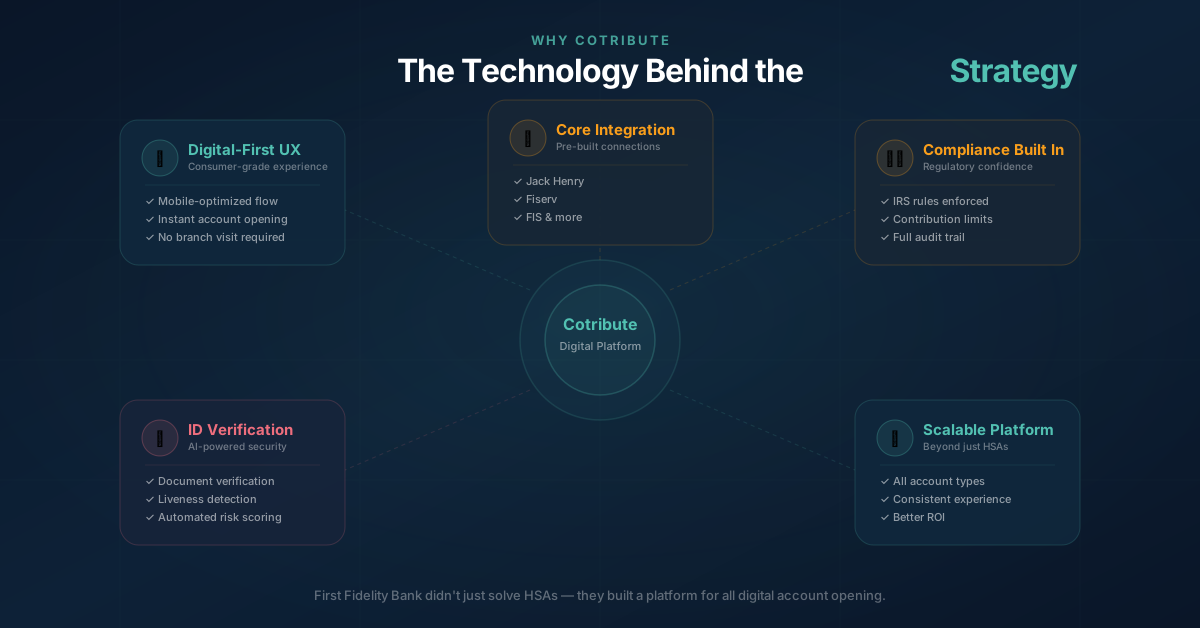
1. Digital-First Experience
First Fidelity Bank needed a platform that could compete with neobanks and fintechs on user experience.
Traditional bank account opening:
- Multi-page forms
- Branch visit required
- Days to approval
- Clunky mobile experience
Cotribute platform:
- Mobile-optimized, seamless flow
- Instant account opening
- No branch visit required
- Modern, consumer-grade UX
Result: HSA customers expect digital convenience. First Fidelity Bank can now deliver it.
2. Core Banking Integration
Many fintech solutions sound great in demos but fail during implementation because they can't integrate with core banking systems.
Cotribute is different. We've built pre-integrated connections with major core systems—Jack Henry, Fiserv, FIS—so First Fidelity Bank didn't have to worry about whether it would work.
It just did.
3. Compliance Built In
HSAs have specific compliance requirements—IRS rules, contribution limits, qualified expenses, reporting requirements.
Rather than First Fidelity Bank having to build that expertise in-house, Cotribute's platform includes HSA compliance as part of the product.
Regulatory confidence without regulatory burden.
4. Speed to Market
Time kills deals. The longer a project takes, the more opportunities for delays, scope creep, and momentum loss.
As John noted, the implementation with Cotribute was smooth and fast—allowing First Fidelity Bank to launch their digital HSA platform quickly and start seeing results.
5. Scalability Beyond HSAs
Here's where the strategy gets really interesting.
First Fidelity Bank didn't just use Cotribute for HSAs. They used it as their digital account opening platform for all account types—consumer checking, savings, business accounts, and more.
Why this matters:
Once you've invested in a digital platform, you want to maximize its value. Using Cotribute for multiple account types means:
- Single platform to maintain
- Consistent member experience across products
- Better ROI on technology investment
- Faster time to market for new products
The Results: From HSA Pilot to Deposit Growth Engine
While specific numbers weren't disclosed in the podcast, the direction was clear: First Fidelity Bank's digital HSA strategy is working.
What Success Looks Like:
Phase 1: HSA Launch
- Digital platform live
- Smooth member experience
- Positive early adoption
- Compliance and operations running smoothly
Phase 2: Expansion
- HSA accounts growing
- Platform extended to other account types
- Member acquisition accelerating
- Deposit growth meeting/exceeding projections
Phase 3: Competitive Differentiation
- First Fidelity Bank positioned as digital leader
- Attracting customers who want modern banking experience
- HSA offering differentiates from local competitors
- Foundation built for future innovation
The Broader Impact:
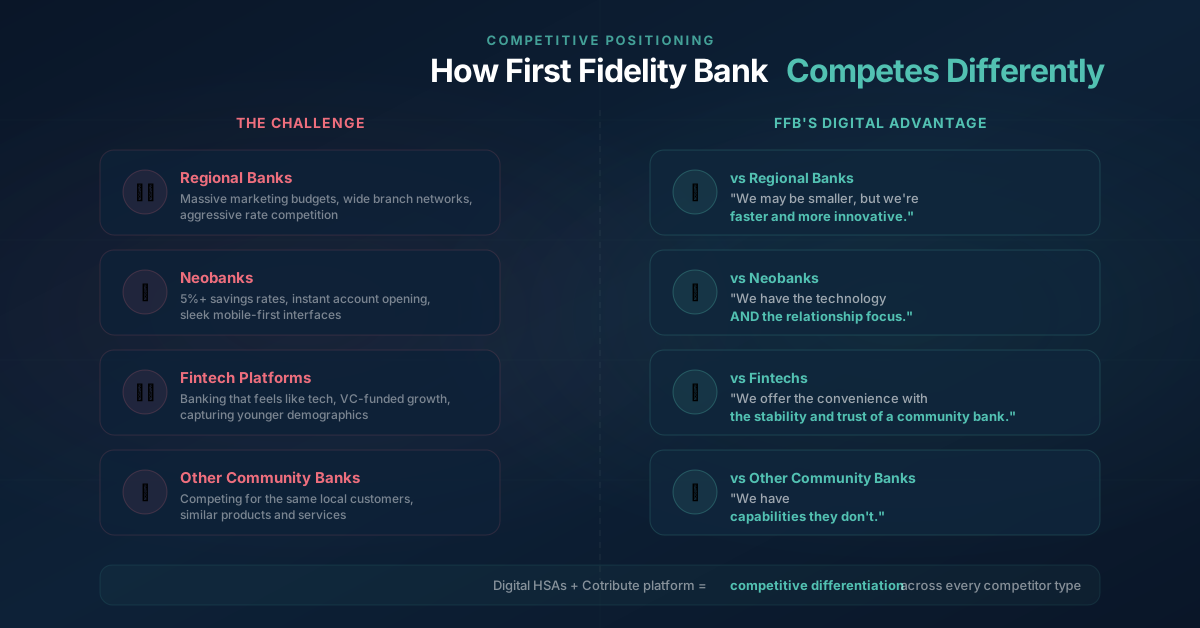
Beyond just deposit numbers, First Fidelity Bank's digital platform strategy has positioned them to compete effectively against:
Regional Banks: "We may be smaller, but we're faster and more innovative."
Neobanks: "We have the technology AND the relationship focus."
Fintechs: "We offer the convenience with the stability and trust of a community bank."
Other Community Banks: "We have capabilities they don't."
Key Lessons for Community Banks and Credit Unions
First Fidelity Bank's story offers several takeaways for financial institutions thinking about deposit growth and digital transformation:
1. Look for White Space, Not Red Oceans
HSAs are a growing market with limited competition from community banks. That's opportunity.
Question for your institution: What underserved markets or products could become your growth engine?
- Specialty accounts (HSAs, education savings, etc.)
- Underserved demographics (Gen Z, gig workers, etc.)
- Geographic niches
- Business segments
2. Digital Isn't Optional Anymore—It's How You Compete
First Fidelity Bank recognized that deposit growth requires digital capabilities. Branches alone won't cut it.
The reality: Members expect instant, mobile-first experiences. If you can't deliver that, they'll go elsewhere.
3. Partner with Fintechs, Don't Fear Them
The build-vs-buy-vs-partner decision often paralyzes banks. First Fidelity Bank chose partnership and it's working.
Why fintech partnerships work:
- Faster time to market
- Lower upfront costs
- Access to innovation
- Compliance and integration expertise
- Ability to focus on members, not technology
4. Platform Thinking > Point Solutions
First Fidelity Bank didn't just solve HSAs. They implemented a platform that supports all digital account opening.
Strategic advantage: Once you have the platform, launching new products is faster and cheaper.
5. Speed Matters
Digital transformation projects that drag on for years rarely succeed. First Fidelity Bank moved quickly, implemented efficiently, and started seeing results.
Lesson: Don't let perfect be the enemy of good. Launch, learn, iterate.
6. HSAs Specifically: Underrated Opportunity
If your bank or credit union hasn't seriously considered HSAs, it's time to take another look.
Why HSAs work as a deposit strategy:
- Growing market (35M+ accounts, $100B+ assets)
- Sticky deposits (people don't switch HSA providers frequently)
- Tax advantages attract customers
- Employer partnerships create pipeline
- Less rate-sensitive than traditional savings
- Younger demographic (future relationship potential)
The Technology Behind the Strategy: How Cotribute Enables Digital HSAs
Let's get specific about what makes digital HSA account opening work from a technology perspective.
Challenge 1: Complex Account Types
HSAs aren't simple checking accounts. They have:
- IRS contribution limits (individual, family, catch-up)
- Qualified expense rules
- Tax reporting requirements
- Employer coordination needs
- Investment options (for some HSAs)
Cotribute Solution:
Pre-built HSA logic in the platform. Banks don't have to code contribution limits or compliance rules—it's already there.
Challenge 2: Identity Verification
Digital account opening requires confident identity verification without in-person document review.
Cotribute Solution:
- AI-powered document verification
- Liveness detection (prevents fraud)
- Real-time identity validation
- Multi-factor authentication
- Automated risk scoring
Challenge 3: Core System Integration
HSA accounts need to integrate with core banking systems for balance updates, transactions, reporting, etc.
Cotribute Solution:
Pre-built integrations with Jack Henry, Fiserv, FIS, and other core platforms. First Fidelity Bank didn't build middleware—it just worked.
Challenge 4: User Experience
Members expect digital HSA opening to be as easy as signing up for any other digital service.
Cotribute Solution:
- Mobile-first design
- Progressive disclosure (only ask for information when needed)
- Auto-fill and pre-population
- Real-time validation
- Clear progress indicators
- Instant account activation
Challenge 5: Compliance and Audit
HSA providers must maintain compliance with IRS regulations and provide audit trails.
Cotribute Solution:
- Automated compliance checks during application
- Complete audit trail of all actions
- Regulatory reporting built in
- Contribution limit enforcement
- Age-based calculations (55+ catch-up contributions)
HSAs as a Gateway: The Full Digital Account Strategy
Here's where First Fidelity Bank's strategy gets even more interesting.
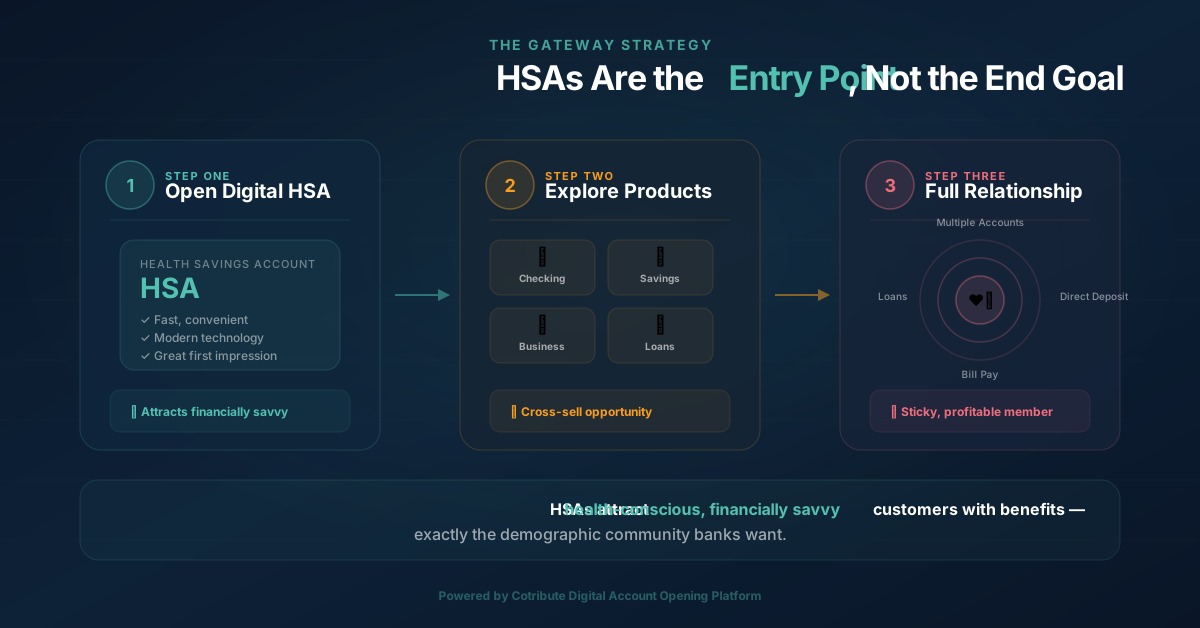
HSAs aren't the end goal. They're the entry point.
The Customer Journey:
Step 1: Customer opens digital HSA
- Fast, convenient experience
- Modern technology
- Positive first impression
Step 2: Customer explores other products
- Checking account for everyday banking
- Savings for emergency fund
- Business account (if self-employed)
- Loans (auto, mortgage, personal)
Step 3: Customer becomes full-relationship member
- Multiple accounts
- Direct deposit
- Bill pay
- Sticky, profitable relationship
The Power: HSAs attract customers who are health-conscious, financially savvy, and often employed with benefits—exactly the demographic community banks want.
Once they're in with an HSA, the opportunity to expand the relationship is significant.
The Future: What's Next for First Fidelity Bank and Digital Banking?
While the BankTalk Podcast focused on HSAs, the conversation hinted at bigger ambitions.
Potential Expansion Areas:
More Account Types:
- Youth savings accounts
- Business cash management
- Specialty lending products
- Investment accounts
More Digital Features:
- Instant loan decisions
- Digital loan closings
- Cross-sell automation
- Personalized product recommendations
More Partnerships:
- Employer HSA programs
- Benefits administrator integrations
- Healthcare provider partnerships
- Fintech ecosystem connections
More Innovation:
- AI-powered member service
- Predictive analytics
- Embedded banking
- API-first architecture
The Vision: First Fidelity Bank isn't just adding digital features. They're becoming a digital-first community bank that competes on convenience, speed, and innovation while maintaining the personal relationships that define community banking.
What This Means for the Credit Union Industry
While First Fidelity Bank is a community bank, the lessons apply directly to credit unions.
In fact, credit unions may be even better positioned to execute this strategy:
Credit Union Advantages:
1. Member-First Mission
Credit unions exist to serve members, not shareholders. Digital transformation that improves member experience aligns perfectly with that mission.
2. Member Loyalty
Credit union members are often more loyal than bank customers. That loyalty provides a foundation for introducing new digital products.
3. Tax-Advantaged Status
Credit unions can invest in technology without the same profit pressures banks face.
4. Community Connection
Credit unions are deeply embedded in their communities. HSAs through local employers create natural partnership opportunities.
Credit Union Challenges:
1. Technology Lag
Many credit unions are further behind on digital capabilities than banks.
2. Resource Constraints
Smaller credit unions may struggle to fund digital transformation.
3. Mindset Shift
Some credit unions still view digital as "nice to have" rather than strategic necessity.
The Opportunity: Credit unions that move quickly on digital HSA strategies can leapfrog competitors and attract the next generation of members.
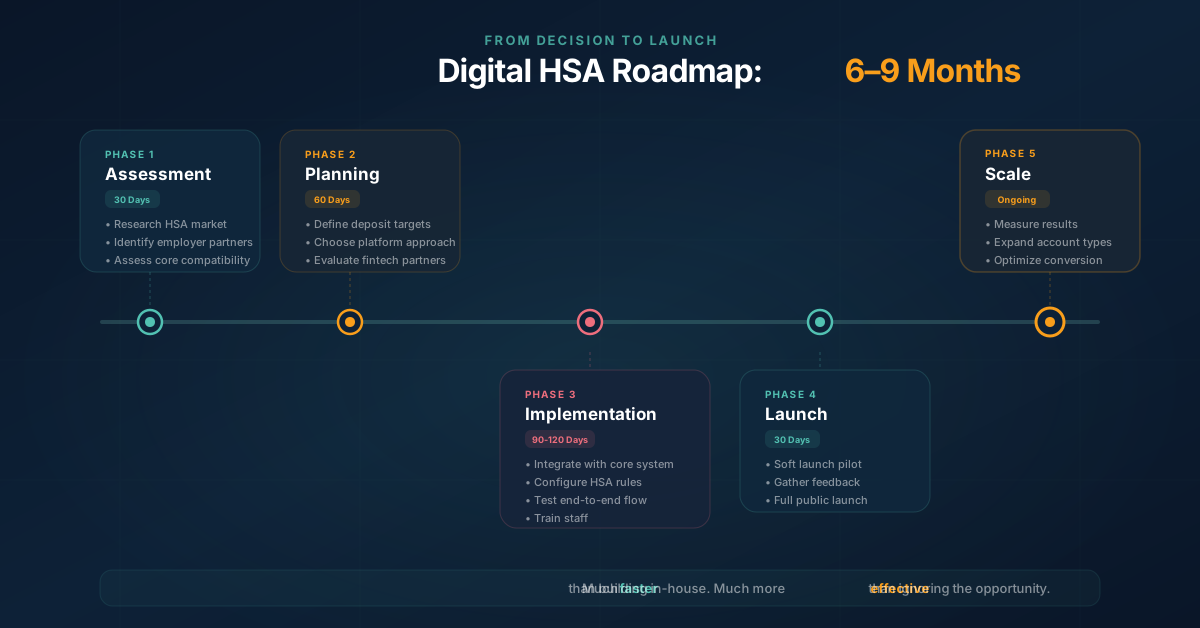
How to Get Started: A Roadmap for HSA Digital Strategy
If you're a community bank or credit union leader considering an HSA strategy, here's a practical roadmap:
Phase 1: Assessment (30 Days)
- [ ] Research HSA market in your geography
- [ ] Identify employer partners (companies with 50+ employees)
- [ ] Evaluate current digital account opening capabilities
- [ ] Assess core banking system compatibility
- [ ] Review regulatory requirements and compliance readiness
- [ ] Calculate potential deposit growth (conservative projections)
Phase 2: Planning (60 Days)
- [ ] Define goals (deposit targets, customer acquisition, product expansion)
- [ ] Choose platform approach (build, buy, or partner)
- [ ] Evaluate fintech partners (if partnering)
- [ ] Develop implementation timeline
- [ ] Create marketing and launch strategy
- [ ] Secure executive sponsorship and board approval
Phase 3: Implementation (90-120 Days)
- [ ] Select and contract with technology partner
- [ ] Integrate with core banking system
- [ ] Configure HSA product rules and limits
- [ ] Test end-to-end account opening flow
- [ ] Train staff on HSA operations
- [ ] Develop member education materials
- [ ] Create employer partnership program
Phase 4: Launch (30 Days)
- [ ] Soft launch with pilot group
- [ ] Monitor performance and troubleshoot issues
- [ ] Gather feedback and optimize
- [ ] Full public launch
- [ ] Execute marketing campaigns
- [ ] Activate employer partnerships
Phase 5: Scale (Ongoing)
- [ ] Measure results (deposits, customers, costs)
- [ ] Expand to additional account types on platform
- [ ] Optimize conversion rates and user experience
- [ ] Build employer partnership pipeline
- [ ] Explore additional digital products
Total Timeline: 6-9 months from decision to launch
Much faster than building in-house. Much more effective than ignoring the opportunity.
The Bigger Picture: Digital Transformation as Competitive Strategy
First Fidelity Bank's HSA story is really a digital transformation story.
The lesson isn't just "add HSAs."
The lesson is: Find an underserved market, deliver it through modern digital technology, and use it as a platform for broader growth.
Other Applications of This Strategy:
For Credit Unions:
- Youth banking for Gen Z
- Gig worker accounts (Uber drivers, freelancers)
- Small business digital banking
- Specialty lending (green loans, education loans)
For Community Banks:
- Professional accounts (doctors, lawyers)
- Geographic niche (second-home markets, college towns)
- Industry specialization (healthcare, nonprofits)
- Digital-first branch model
The Pattern:
1. Identify underserved segment
2. Deliver exceptional digital experience
3. Use technology platform for multiple products
4. Build relationships and expand wallet share
5. Differentiate from competitors
Listen to the Full Episode
Want to hear the complete conversation between Philip Paul, John Symcox, and the BankTalk Podcast hosts?
BankTalk Podcast Episode 121: "First Fidelity Bank's Success with HSA Strategy"
Listen here: https://www.buzzsprout.com/1356058/episodes/17103087
Topics covered include:
- First Fidelity Bank's competitive landscape
- Why HSAs became a strategic focus
- The technology partnership decision
- Implementation experience and lessons learned
- Results and future plans
- Advice for other community banks
Hosts: Charlie Kelly, Jordan Kelly, Rich Carty
Guests: John Symcox (CIO, First Fidelity Bank) and Philip Paul (CEO, Cotribute)
Sponsor: Remedy Consulting
Ready to Explore Digital HSAs for Your Institution?
If First Fidelity Bank's strategy resonates with your deposit growth challenges, let's talk.
Cotribute delivers digital HSA account opening (and all account types) with:
- Mobile-first user experience
- Core banking integration
- Built-in compliance
- Fast implementation
- Scalable platform
Schedule a demo: www.cotribute.com/demo
Or reach out directly: hello@cotribute.com
Let's turn HSAs from overlooked niche into your competitive advantage.
About First Fidelity Bank
First Fidelity Bank is a community bank committed to serving its customers with innovative financial solutions and personalized service. By embracing digital transformation while maintaining strong community relationships, First Fidelity Bank continues to grow and compete effectively against larger regional banks and fintech competitors.
Learn more: www.ffb.com
About Cotribute
Cotribute is a digital account opening platform purpose-built for community banks and credit unions. We help financial institutions compete in a digital-first world by delivering seamless, mobile-optimized account opening experiences across all account types—including HSAs, checking, savings, business accounts, and more.
Our platform includes automated identity verification, fraud detection, real-time decisioning, and core system integration with compliance built in.
Learn more: www.cotribute.com
